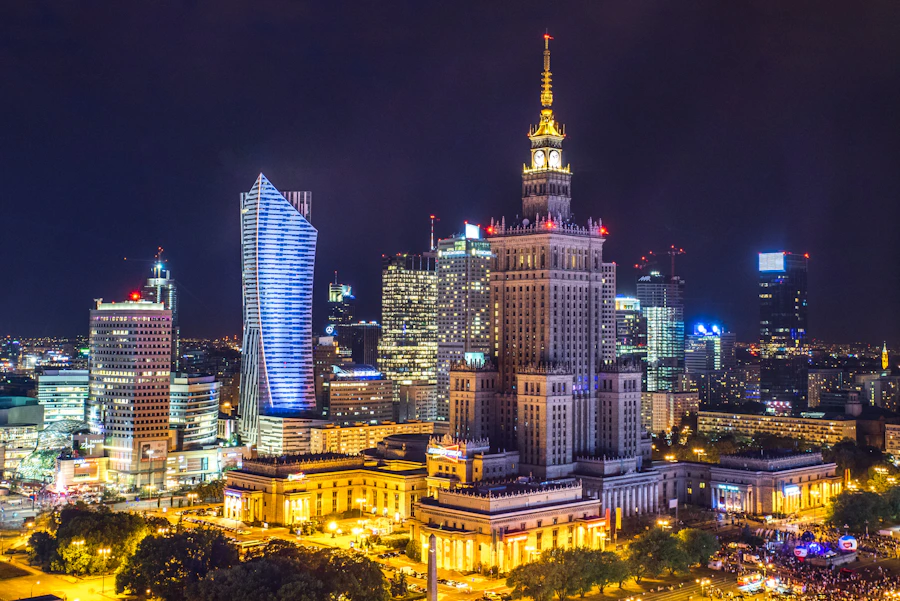
Choosing where to live is the single biggest decision you will make after landing in Poland — and for Asian families, it is rarely just about price per square meter. When you research safe neighborhoods in Warsaw for Asian families 2026, you are really asking five questions at once: Is the street safe at night? Will my child face problems at school? Is there a halal butcher, a Hindu temple, or an Asian grocery within walking distance? Can I afford the rent on a Polish salary? And will my Karta Pobytu address registration go smoothly at this town hall? This guide answers all five for Indian, Bangladeshi, and Sri Lankan workers moving to Warsaw or relocating within the city. We cover crime statistics from the Polish Statistical Office, real 2026 rent ranges, district-by-district family verdicts, and the documents you must update once you move.
Why district choice matters more than rent price
Warsaw is statistically one of the safest capital cities in Europe — but "safe" looks different in Praga-Północ at midnight versus Wilanów at midnight. For Asian families, three factors override the headline crime rate: school catchment areas (rejonizacja), public transport access to your workplace, and proximity to a community of fellow countrymen. A cheap apartment in a poorly connected district often costs you 90 minutes of daily commute and an isolated child. A slightly pricier flat in a balanced district saves marriages.
Polish official crime data is published quarterly by the Polish police (policja.pl) and the Statistics Poland office. Warsaw's overall crime index in 2025 was 23% below the EU capital average. The districts most often flagged for petty theft are Śródmieście (tourist area) and parts of Praga-Północ; the lowest-risk districts are consistently Wilanów, Ursynów, and Bielany.
- Safety score (police-reported incidents per 1,000 residents, 2025): Wilanów 8.2, Ursynów 11.4, Bielany 12.1, Mokotów 14.7, Ochota 16.3, Wola 19.8, Praga-Południe 22.1, Śródmieście 41.2.
- Average asking rent for a 2-bedroom (50–60 m²) in 2026: Wilanów 5,200 PLN, Ursynów 4,400 PLN, Mokotów 4,800 PLN, Ochota 4,100 PLN, Wola 4,300 PLN, Bemowo 3,700 PLN, Bielany 3,800 PLN, Praga-Południe 3,500 PLN.
- Distance to the nearest South Asian grocery and a halal-certified shop matters for daily life — Mokotów, Ochota, and Wola win on this metric.

District-by-district verdict for Indian, Bangladeshi and Sri Lankan workers
Below is an honest verdict on the eight districts where Asian families most often settle. Rankings combine official safety data, rental affordability on a 7,000–12,000 PLN net salary, school quality, and walkable access to Asian groceries and places of worship.
Ursynów — best overall for Asian families with school-age children
Ursynów is the southern green belt of Warsaw and consistently the top pick for Indian IT workers and Sri Lankan families with children. Crime is low, primary schools are well-rated, the metro line 1 takes you to Mokotów business park in 12 minutes, and Kabaty forest is on your doorstep. Rents are mid-range and the housing stock is post-2000 with elevators and parking. A growing Indian community gathers around Natolin and Imielin metro stations on weekends.
Mokotów — best for working couples, premium but justified
Mokotów (especially Stary Mokotów and Służewiec, also nicknamed Mordor for its office towers) is where most foreign-company professionals live. Plus: walkable, safe, central, English widely spoken. Minus: 4,800–6,500 PLN for a 2-bedroom, and Służewiec gets quiet on weekends. Excellent for childless couples or families with one child; multiple Indian restaurants, a Tamil Sangam meet-up, and 24/7 shops.
Wilanów — premium, safe, quiet — for senior professionals
Wilanów is Warsaw's lowest-crime district and home to many Indian IT directors and Bangladeshi business owners. New-build apartments, baby-friendly parks, top private and bilingual schools, the Indian Embassy nearby. The catch: no metro, longer commute, rent 5,000+ PLN. Make this choice if you earn 15,000+ PLN net and prioritize space and silence over nightlife.
Ochota — best value for Bangladeshi and Sri Lankan workers
Ochota sits next to Śródmieście but at 30% lower rent. Tram and metro coverage is excellent, Politechnika and Filtry districts feel safe at night, and the area has a quietly growing South Asian footprint — at least three halal restaurants, two Indian grocers, and a small Bangla-speaking community around Grójecka street.
Wola — fast-changing, the new business district
Wola's east side (around Rondo Daszyńskiego and Wola Park) is the fastest-developing area of Warsaw. New offices mean new apartments, modern amenities, and metro line 2. Safety has improved sharply since 2022. Watch out for the older western edge near Młynów, which is more uneven block-by-block.
Bemowo & Bielany — affordable, quiet, family-friendly
If your budget is 3,500–4,200 PLN and you need three bedrooms, Bemowo and Bielany are your friends. Both have metro access (line 1 for Bielany, line 2 extension for Bemowo from 2024), green spaces, and reasonable schools. Community life is more Polish, but that suits families who want their children to integrate quickly.
Praga-Południe — emerging value pick
South Praga (Saska Kępa, Gocław) is genuinely safe and increasingly fashionable, despite the older reputation of Praga-Północ. Saska Kępa is multicultural, embassy-rich, and walkable. Strong value for Sri Lankan and Bangladeshi families who want central access at suburban prices.
Areas to approach with caution
Praga-Północ (around Brzeska street), parts of Wola-Młynów after dark, and the Dworzec Centralny / Patelnia area in Śródmieście report the highest petty-theft rates. None are dangerous in the violent-crime sense, but they are not first-choice for families with small children.
Rent budget by salary band and family size
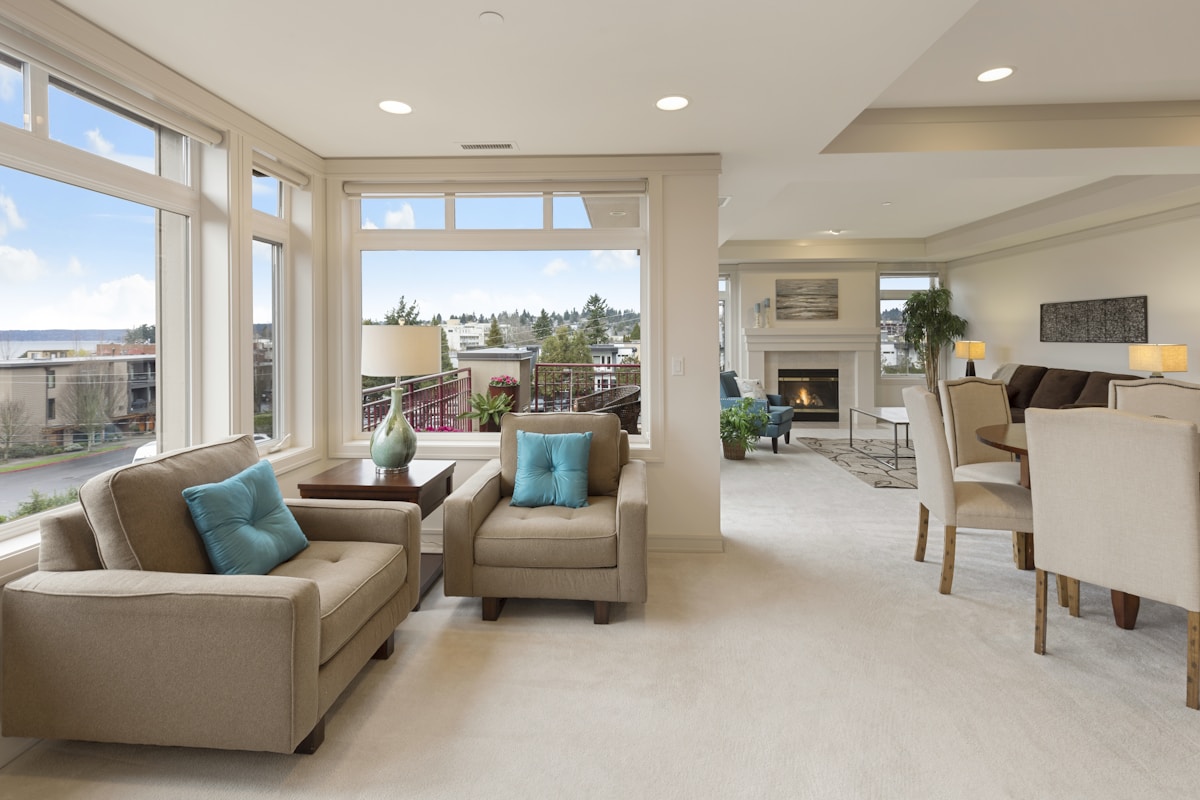
A realistic rule used by experienced expat families: housing should consume no more than 30–35% of net household income. Below is a sanity-check matrix for 2026 Warsaw rents (utilities excluded — add 600–900 PLN winter, 300–500 PLN summer):
- Net household 6,000–8,000 PLN: aim for Bemowo, Bielany, outer Praga-Południe, outer Ursynów. Budget 2,800–3,500 PLN for a small 2-room.
- Net household 8,000–12,000 PLN: Ochota, central Ursynów, Wola, central Praga-Południe. Budget 3,500–4,500 PLN for a comfortable 2-bedroom.
- Net household 12,000–18,000 PLN: Mokotów, inner Ursynów, eastern Wola. Budget 4,500–6,000 PLN for a modern 3-room.
- Net household 18,000+ PLN: Wilanów, Stary Mokotów, premium Wola high-rises. Budget 6,000–9,000 PLN for a family-size apartment with parking.
Practical tip: Always view the apartment at two different times — once during the day and once after 9 PM. The same street can feel completely different at night, and you will catch issues that photos never show.
Safety beyond crime stats — what really matters for Asian families
Crime numbers are only half the picture. For Indian, Bangladeshi, and Sri Lankan families, four other factors decide whether a neighborhood actually feels safe. First, school environment — visit the local public school before signing the lease (we cover this in detail in our guide to finding a school for your Asian child in Warsaw). Second, community presence — a single Indian or Bangladeshi neighbor on the staircase changes everything emotionally for newcomers. Third, the local urząd dzielnicy (district hall) — some are notoriously slow with foreigner registrations, others are efficient and English-friendly. Fourth, healthcare access — Mokotów, Ochota, and Wilanów have the highest concentration of English-speaking GPs, which we discuss in our guide to finding English-speaking doctors in Poland.
- Check that your street has working CCTV at the building entrance (monitoring) — this is standard in newer Ursynów/Wilanów buildings, less so in older Wola/Praga blocks.
- Confirm the building has a working domofon (intercom) and that the main door auto-locks. Older communist-era blocks sometimes don't.
- Ask neighbors (in English or via translator) about racial harassment incidents. Honest answers come from doormen and shopkeepers, not landlords.
Once you move: the paperwork checklist
Your new address triggers a chain of legal updates. Polish law requires you to register your residence (zameldowanie) within 30 days, update your Karta Pobytu address, and notify your employer and ZUS. Miss the address update on your Karta Pobytu and your renewal can be slowed by months — we explain this in detail in our Karta Pobytu Warsaw best strategy 2026 guide.
- Sign the rental contract (umowa najmu) — insist on a written contract; a verbal one cannot be used for zameldowanie.
- Register your address at the district hall (urząd dzielnicy) within 30 days. Bring the rental contract and your passport/Karta Pobytu.
- Update your Karta Pobytu address within 15 days via the MOS online system or in person.
- Inform your employer's HR — they must update ZUS within 7 days.
- Re-register with a local przychodnia (NFZ clinic) close to your new address.
- If you have children: enroll in the nearest rejon school by the September 1st deadline.
Frequently Asked Questions
Which Warsaw district is the safest for Asian families in 2026?
Statistically, Wilanów has the lowest reported crime rate per 1,000 residents, followed by Ursynów and Bielany. For Asian families balancing safety, schools, and affordability, Ursynów is the most popular and most practical choice — strong public schools, metro access, an active Indian community, and rents that fit a mid-range IT salary.
Is Praga safe for Indian and Bangladeshi families?
Praga is split into two very different districts. Praga-Północ (especially around Brzeska street) has a tougher reputation and is not first-choice for families. Praga-Południe — particularly Saska Kępa and Gocław — is genuinely safe, multicultural, embassy-rich, and offers strong value compared to Mokotów. The Vistula river divides the two perceptions more sharply than the actual statistics.
How much rent should I budget for a safe Warsaw neighborhood in 2026?
Plan 3,500–4,500 PLN per month for a comfortable 2-bedroom in safe mid-range districts like Ochota, central Ursynów, or Wola. Add 600–900 PLN for winter utilities. Premium districts like Wilanów or Stary Mokotów range from 5,000 to 9,000 PLN. Avoid the temptation of sub-3,000 PLN deals in unfamiliar areas — visit the street at night before committing.
Do I need to update my Karta Pobytu when I move within Warsaw?
Yes. Polish law requires you to update your registered address within 15 days of moving. You can do this through the MOS online system or in person at the Mazovian Voivode Office. Failing to update can complicate your next Karta Pobytu renewal and trigger unnecessary delays. Always keep the rental contract and zameldowanie certificate together with your immigration documents.
Are there Asian community hubs in specific Warsaw neighborhoods?
Yes. Indian IT professionals cluster around Ursynów (Natolin, Imielin) and Mokotów-Służewiec. Bangladeshi and Sri Lankan workers often settle around Ochota (Grójecka street) and southern Wola. The Hindu Society of Poland and the main mosque are accessible from central districts. South Asian grocery stores are most concentrated in Mokotów, Ochota, and Wola — making these the most convenient daily-life districts.
Choosing the right Warsaw district is the foundation of a calm, safe life for your family in Poland. Legal Solutions — 98% approval rate.